Bring the full data estate together.
Connect active and historical data from CDP, EDC, CTMS, laboratories, EHRs, devices, and partner platforms.
- Structured and unstructured data
- Cross-study context
- Preserved identity and provenance
Clinical Trial Analytics & AI
Turn years of collected, cleaned, and analyzed clinical trial data into an accessible, governed resource for operational insight and scientific discovery.
Natural Language Querying
Example
“What is driving screen failures across our studies?”
Your privateClinical Data Lake
The baseline imaging requirement accounts for 38% of screen failures across four studies.
Which studies are most affected?
How do screen failure reasons vary by site?
The analytics challenge
Sponsors have invested millions collecting, cleaning, and analyzing clinical trial data. Yet after a study or reporting cycle, much of that value remains locked in isolated systems, study-specific repositories, and static reports—difficult to access, compare, or reuse.
CDP turns accumulated clinical data into an active, governed resource for every authorized team.
The CDP approach
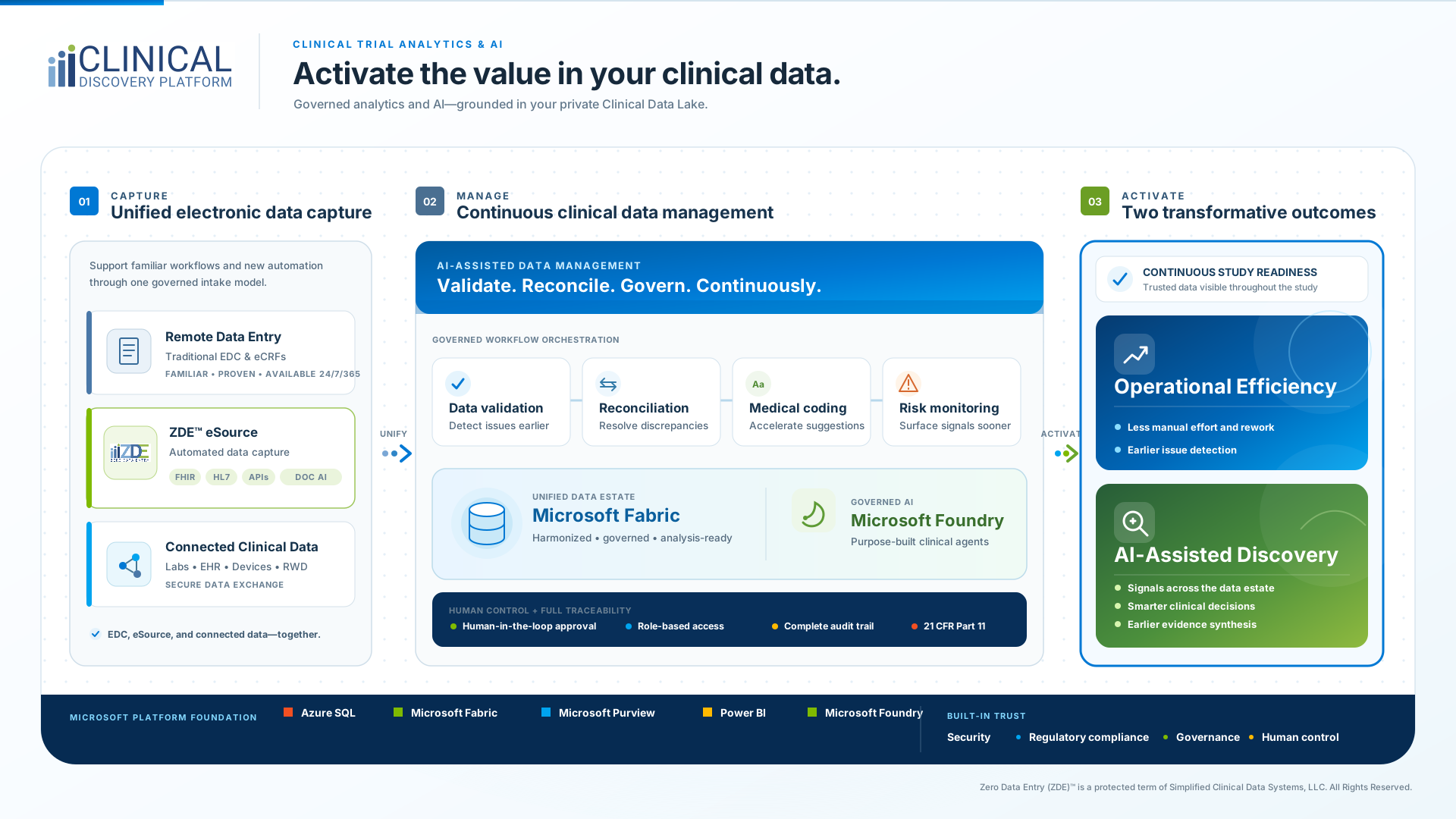
Each client's Clinical Data Lake brings CDP and third-party sources into one governed data estate. Teams can use familiar analytics tools, operational AI agents, and natural-language questions without disconnecting insight from its source or controls.
Connect active and historical data from CDP, EDC, CTMS, laboratories, EHRs, devices, and partner platforms.
Deliver role-relevant insight through Power BI or other preferred analytics tools—without creating another disconnected copy.
Use natural-language querying and purpose-built AI agents to explore operations, evidence, and emerging patterns.
Natural-language querying
From executive leadership to CRAs and investigators, authorized users can ask questions in everyday language and receive answers grounded in the clinical data they are permitted to access.
“Which studies are trending off plan—and why?”
“Which sites need attention this week?”
“What patterns are emerging across patient subgroups?”
“Which records or participants require follow-up?”
AI helps teams surface evidence and investigate faster. Qualified people remain responsible for interpretation and decisions.
AI governance & control
Analytics and AI only create durable value when access, context, lineage, and accountability remain intact. CDP extends the governance of the Clinical Data Lake into every question and use.
Each person can query and analyze only the studies, sources, and fields their role is authorized to access.
Responses are generated from the client’s governed clinical data estate—not an open, public knowledge base.
Source lineage and provenance help teams understand which data supports an answer, signal, or recommendation.
Qualified people interpret findings, apply clinical judgment, and remain accountable for decisions.
Activate the value already in your data
The value of a Clinical Data Lake is not that it stores more data. It is that authorized people can use trusted data to ask better questions, make better decisions, and discover what would otherwise remain hidden.
Frequently asked questions
CDP gives organizations a governed way to activate clinical data while preserving the privacy, permissions, and context required for responsible use.
It is a client-specific clinical data estate built on Microsoft Fabric and OneLake. It can bring together data from CDP and authorized third-party sources while preserving governance, lineage, security, and role-based access.
Yes. Authorized users can ask questions in everyday language and receive responses grounded in the clinical data their role permits them to access. The available answer depends on the quality, scope, and context of the underlying data.
No. Power BI is deeply aligned with the Microsoft platform foundation, but CDP can support other preferred analytics tools and workflows where appropriate.
CDP combines identity and role-based permissions, source lineage, governed data models, traceability, and human oversight. AI assists investigation and discovery; qualified people remain accountable for interpretation and decisions.
Start a strategic conversation
Let's map your clinical data sources, analytics priorities, AI opportunities, and governance requirements.